Organizing an event under a tent is chic and incredibly appealing. But if your guests are shivering through dinner, the magic can quickly melt away like snow in the sun. Too often overlooked, heating for reception tents is actually a key factor that determines guest comfort and the overall atmosphere of your event.With dropping outside temperatures, unpredictable weather, and late-night festivities, many factors make event heating essential, even in spring or autumn. Follow this guide to estimate the ideal heating power based on your tent, your event, and the weather forecast for the big day.

Why is heating essential under a reception tent?
A successful event is a delicate mix of emotion, conviviality... and the perfect temperature. Indeed, as soon as the mercury drops, the atmosphere can suffer: guests withdraw, leave early, and the energy of the event fades.
Even in September, an evening can be chilly, especially in rural areas or near the sea. While blankets provide some comfort and a cozy feel, a good heating system for your reception tent guarantees a stable, pleasant temperature and preserves the positive energy of your event.
It makes all the difference in terms of:
- Comfort, especially for elderly guests or children ;
- Quality of served dishes : preventing hot food from arriving lukewarm ;
- Performance of artists or speakers, who need to perform under good conditions.
👉 Also read : Guide – know the electricity needs of your event
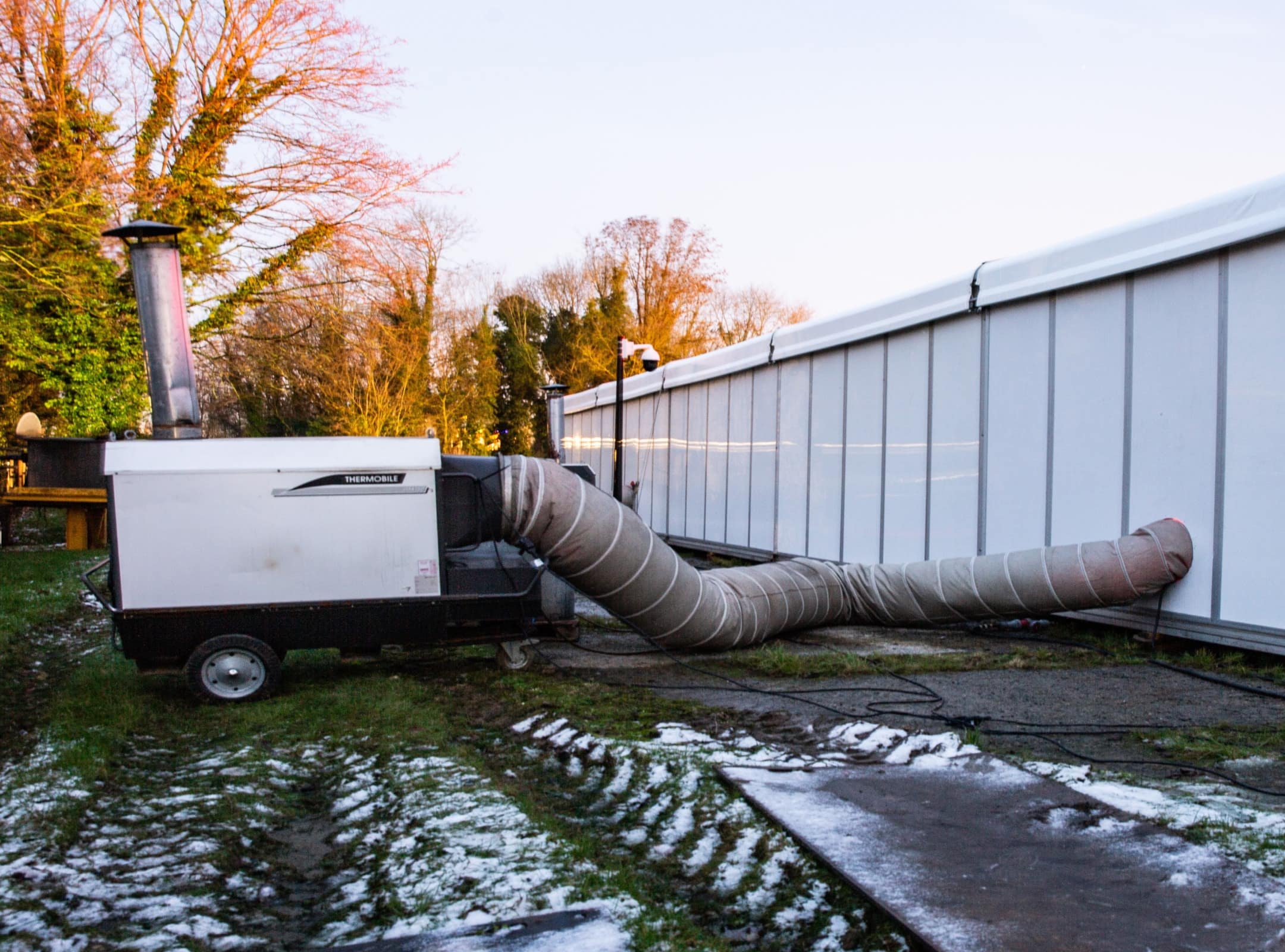
How to estimate your heating needs for an event tent ?
To assess the right heating power for your reception, you need to consider several technical and logistical criteria:
1. Tent surface area
The surface area of your tent is the basis of your calculation. Heating power is generally expressed in watts per square meter. Logically, the larger the area, the greater the required power.
For example:
- A 100 m² tent for a seated dinner: plan about 20 kW of heating in autumn ;
- A 300 m² tent for a winter conference: plan up to 75 kW.
2. Season and expected outside temperature
A May event does not require the same heating as a January wedding! Here are some power benchmarks to consider:
- Autumn cocktail under a semi-open tent: about 150 W/m² ;
- Winter wedding under a closed tent: between 200 and 250 W/m² ;
- Spring evening under shelter: 100 to 150 W/m² may suffice.
3. Type of event
Not all events require the same level of heating. For example, during a seated dinner, guests remain still for several hours and are therefore more sensitive to cold; it’s important to maintain a constant, comfortable temperature around 20–22°C. In contrast, during a cocktail or dance party, guests move around, talk, dance, etc., so you can heat a bit less while still maintaining a pleasant atmosphere.
Finally, if you are hosting a conference, ceremony, or any formal speaking event, make sure to choose a silent and discreet heating system. Acoustic comfort and sound clarity are as important as thermal comfort for participants.
4. Tent structure
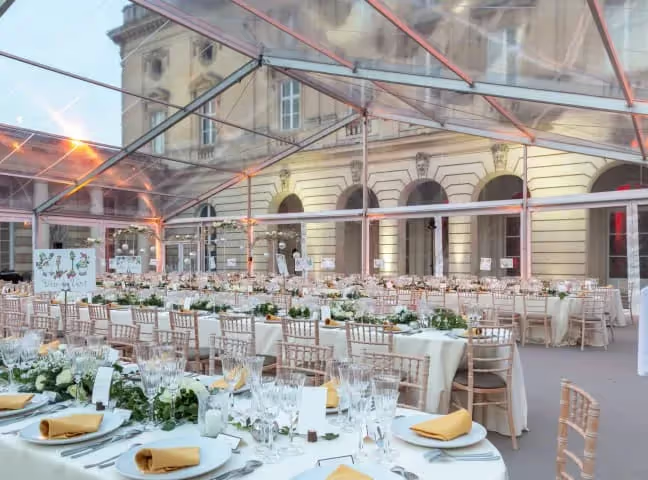
Heating performance also depends largely on the type of tent. A fully enclosed tent with cladding and a floor offers excellent thermal insulation: heat is well retained, optimizing energy efficiency. Conversely, a clear roof marquee, transparent tent is more prone to heat loss, especially in cold or windy weather.
If your tent is semi-open or fully open on one or more sides, be extra cautious about wind, which can lower the interior temperature by several degrees.
Another crucial point not to neglect : floor insulation. A floor, especially if carpeted, prevents heat loss through the ground and significantly improves overall thermal comfort.
Which heating solutions to choose for a reception tent ?
Each event heating option has its own specifics. Here are the main ones, with their advantages and limitations:

How much heating should you plan for your tent according to the event type ?
Wedding with 120 guests under crystal tent (180 m²)
- Season : November ;
- Structure : Transparent tent closed on sides ;
- Type : Seated dinner + dance floor ;
- Estimated needs : 35 to 40 kW (forced air heating recommended).
B2B cocktail evening in a private hotel courtyard (100 m²)
- Season : Mid-October ;
- Structure : Lycra semi-open tent ;
- Type : Standing cocktail ;
- Estimated needs : 15 to 18 kW (patio heater as supplement + discreet forced air).
Corporate conference under silhouette structure (300 m²)
- Season : February ;
- Structure : Closed tent with flooring ;
- Type : Seated audience for 2 hours ;
- Estimated needs : 60 to 75 kW (forced air + underfloor heating recommended).
👉 Also read : Guide to renting heating and air conditioning equipment for your events
How to optimize heating in an event tent ?
Here are some technical tips to maximize the thermal efficiency of your installation:
Insulate the floor
Often underestimated, good floor insulation changes everything. Using a floor covered with carpet if possible greatly reduces heat loss through the ground. In autumn or winter, this is essential for optimal thermal comfort.
Limit heat loss
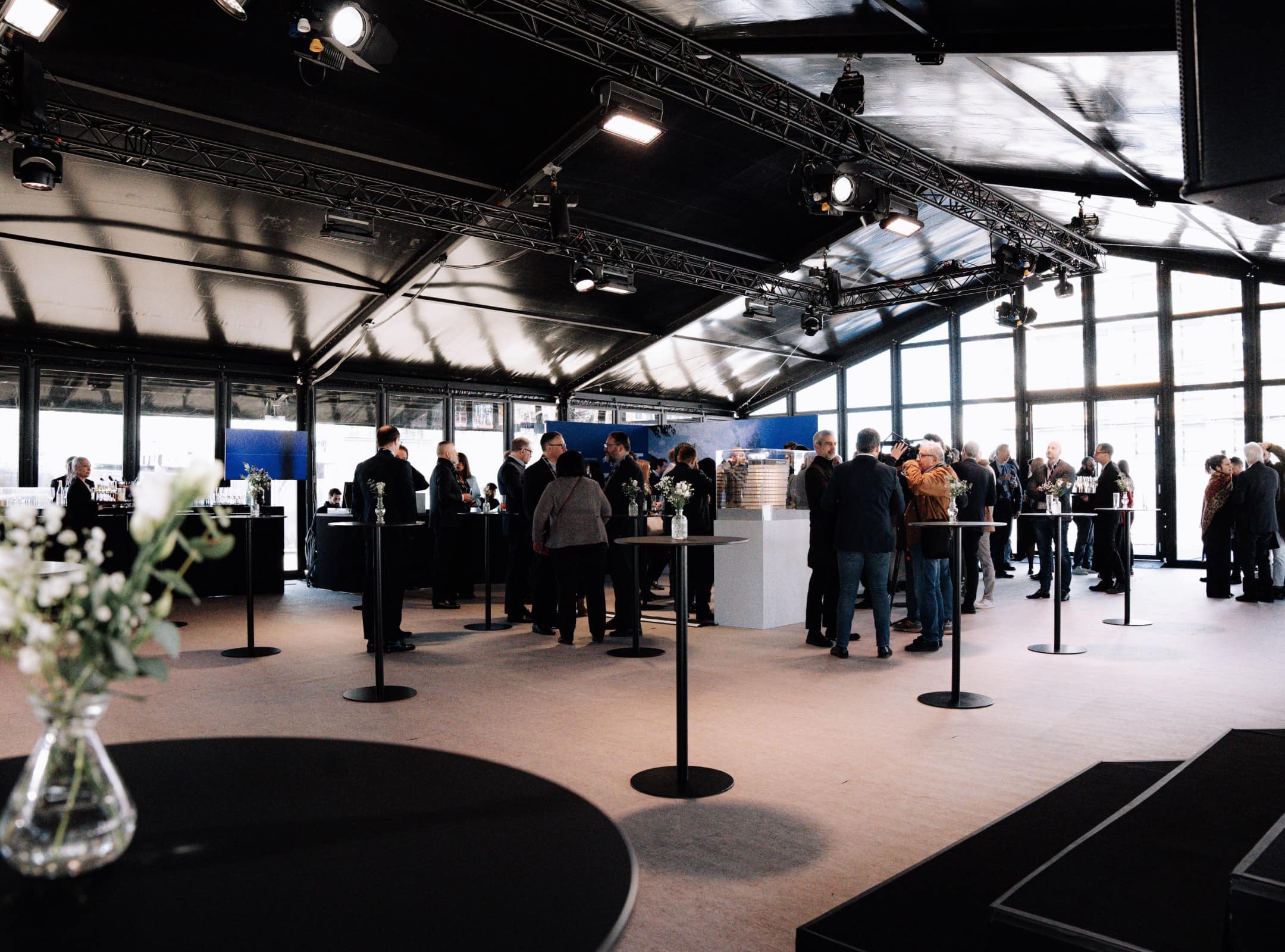
Even with good heating, if your tent lets the wind in, all the heat escapes almost instantly. Properly close the sidewalls, avoid drafts, and if there is a lot of foot traffic, consider installing an entrance airlock. Limiting heat loss improves guest comfort.
Provide adequate power supply
Efficient heating also depends on electrical (or fuel/gas) power. Check your needs and available site capacities in advance. A generator or reinforced electrical connection may be required to safely run your heaters.
Anticipate heating time
Don’t wait for guests to arrive before turning on the heaters. Depending on tent volume, allow 2 to 3 hours to reach a comfortable temperature. Good anticipation creates a welcoming atmosphere right from the start.
Key takeaways from this article :
- Heating for reception tents ensures the comfort and overall experience of attendees.
- Required power depends on several factors : surface area, season, tent structure, event type.
- It is better to anticipate technical constraints to avoid unpleasant surprises.
Are you organizing a tented event and unsure how much heating to plan? Let’s talk! At Atawa, our experts support you with heating solutions that are both efficient, stylish, and perfectly adapted to your needs.


Ile-de-France・Centre-Val de Loire
01 79 75 89 87

Provence-Alpes-Côte d’Azur・Corse
04 84 49 62 64
Nouvelle-Aquitaine
05 35 54 59 88
Hauts-de-France・Normandie
03 74 09 83 62
Bretagne・Pays de la Loire
02 57 64 07 94
Grand-Est・Bourgogne
03 52 74 06 68
Auvergne-Rhône-Alpes
04 28 29 61 35
Occitanie
05 82 95 39 28
Switzerland
+41 076 504 33 02
subtitle
Product name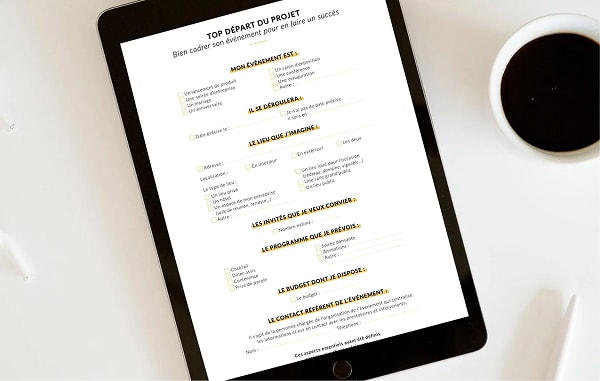
Discover the Atawa Guide
The Atawa Guide is the new essential tool for organizing your events: from launching your project to bringing it to life, no detail has been overlooked to ensure your event's success.