Trade shows are unique opportunities to meet potential clients in person, build genuine connections, and bring your business to life beyond the screen. However, to make the most of your event, careful preparation is essential.
At Atawa, experts in custom stand design, we have been supporting our clients on this journey for several years. Ready for our best advice?
Here are the 5 essential steps to prepare for a trade show and turn this opportunity into a true success.

Why Participate in a Trade Show in France? 4 Key Benefits
A well-targeted trade show is an excellent growth catalyst for your business. But specifically, what are the benefits of taking part in a trade show?
- Increased visibility: nothing replaces face-to-face contact. At a trade show, your business exists physically in front of your target audience and builds brand awareness.
- Lead generation: these events make it easier to meet directly with interested clients and prospects. Real business opportunities are within reach.
- Networking development: trade shows are strategic meeting places with potential partners, referrers and key players in your industry. It’s also a chance to strengthen your brand’s reputation.
- Competitive intelligence: your competitors are there too. It’s an opportunity to discover their offerings, their communication and the trends in your market.
Of course, these results depend directly on the quality of your preparation beforehand and your communication strategy.
Preparing for a Trade Show in 5 Key Steps
Good preparation for a trade show relies on a methodical approach. Here are five key steps to ensure an effective presence and reach your objectives.
1. What objectives should you set before a trade show?
Before starting your preparation for a trade show, define specific objectives. Before investing, it is essential to know exactly what you want to get out of it.
Take a moment to identify your priorities: do you want to increase sales, expand your client base, or strengthen your brand’s reputation?
Each objective should be specific, measurable, achievable, relevant and time-bound, following the SMART method.
If you want to generate leads, set yourself a specific number of qualified contacts to reach.
Once set, these objectives will structure your entire preparation process and give meaning to every action you take for the show.
2. How do you choose the right trade show?
Not every trade show matches your business’s needs. A careful selection is essential to ensure your participation is relevant and to optimize your investment.
To choose the right trade show:
- assess the event’s reputation, expected attendance and target audience;
- analyze the list of other exhibitors present;
- check that the show matches your industry;
- make sure visitors match your business objectives.
Choosing the right trade show lays the foundations for a high-value participation.
Want to go further in organizing professional events?
👉 Discover our guide: How to organize a conference?
3. How do you organize the logistics of a trade show?
The success of your participation relies on well-orchestrated logistics. To avoid unexpected issues and ensure the show runs smoothly, every aspect requires particular attention.
- Secure your location as a priority: book early enough to get a strategic spot and potentially benefit from better rates.
- Study the technical specifications: anticipate your stand’s requirements, including surface area, maximum height, power supply, set-up, dismantling and permitted materials.
- Coordinate the delivery of your equipment: make sure everything needed to set up your stand, such as furniture, décor and communication materials, is delivered on time and in good condition.
- Train your teams on the show’s challenges: your staff are your first ambassadors. Run preparation sessions to align them on objectives, key messages to convey and how to interact with visitors.
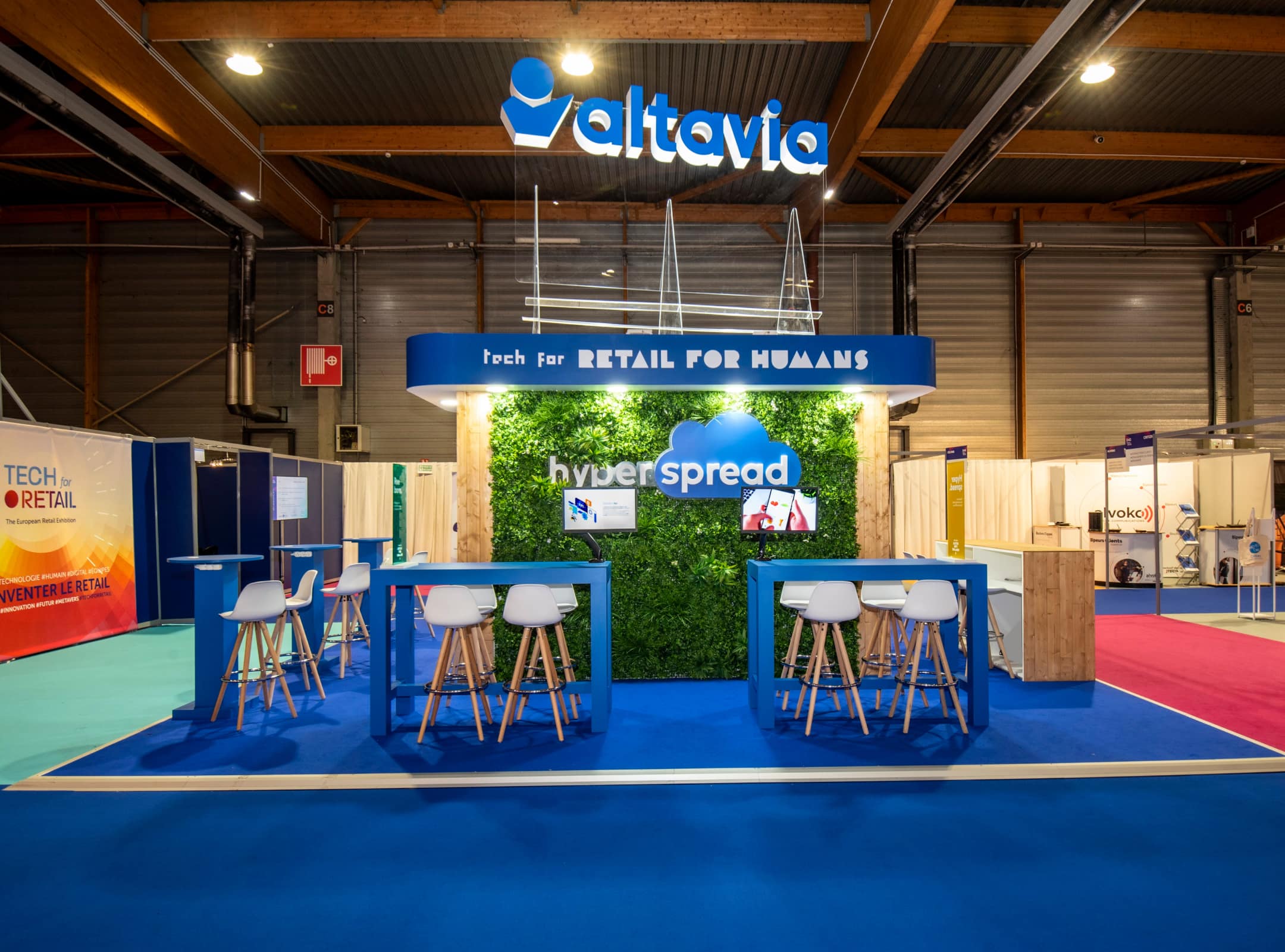
4. How do you design a stand that attracts visitors?
In the buzz of a trade show, you only have a few seconds to capture a visitor’s attention. Your stand needs to spark interest and make people want to stop and discover your business.
To achieve this, investing in your stand’s design is essential.
- Go for a striking design: invest in a stand design that is attractive, professional and consistent with your brand image.
- Create a memorable atmosphere: use impactful structures and visual elements such as lighting, sound, video or networking spaces.
- Offer an immersive experience: the goal is to give visitors a memorable experience that helps them better understand and remember your offer.
Atawa, with several years of experience, supports you in designing and setting up this temporary space to maximize its visual impact.

Need the right equipment for your event?
👉 Discover our guide on renting furniture for professional events.
5. How do you ensure follow-up before and after a trade show?
Your success is not limited to the days of the show itself. It’s the whole cycle, before, during and after the event, that determines the return on a trade show.
- Follow-up before the event: announce your participation on social media and by email. Where possible, send a personalized invitation to your clients and prospects.
- Follow-up during the show: collect visitors’ details and note useful information about their needs and level of interest.
- Follow-up after the event: quickly contact the leads and prospects you met and add qualified contacts to your sales process.
- Performance analysis: review the results to assess the effectiveness of your participation and identify areas for improvement.
Taking Part in a Trade Show Soon? Atawa Can Help
Tight budget, teams tied up elsewhere, or lack of expertise in event design? Preparing for a trade show can quickly become a logistical and financial headache for your business.
Atawa takes this operational burden off your hands. Leave the design of your stand to us.
Our team offers complete support for your trade shows, including:
- the custom design of your stand;
- the installation of partitions and themed decorations;
- the set-up of furniture;
- the integration of technical and audiovisual equipment;
- a turnkey service so you can focus entirely on the strategic aspects of your participation.
You, on the ground. Us, behind the scenes.
While we handle the technical side, you build connections, sign contracts and grow your network.
Key Points for a Successful Trade Show Participation
How much does it cost to take part in a trade show?
The cost of taking part in a trade show varies depending on the event, the surface area booked and the services chosen. Several factors need to be taken into account.
- The location: this is the base cost and can range from a few hundred to several tens of thousands of euros.
- The stand: the budget for its design, construction, furniture and audiovisual equipment is often the largest expense.
- Additional costs: these notably include transport, accommodation, team preparation and communication materials.
An attractive, well-designed stand represents an investment, but it can directly contribute to the visibility and business results of your participation.
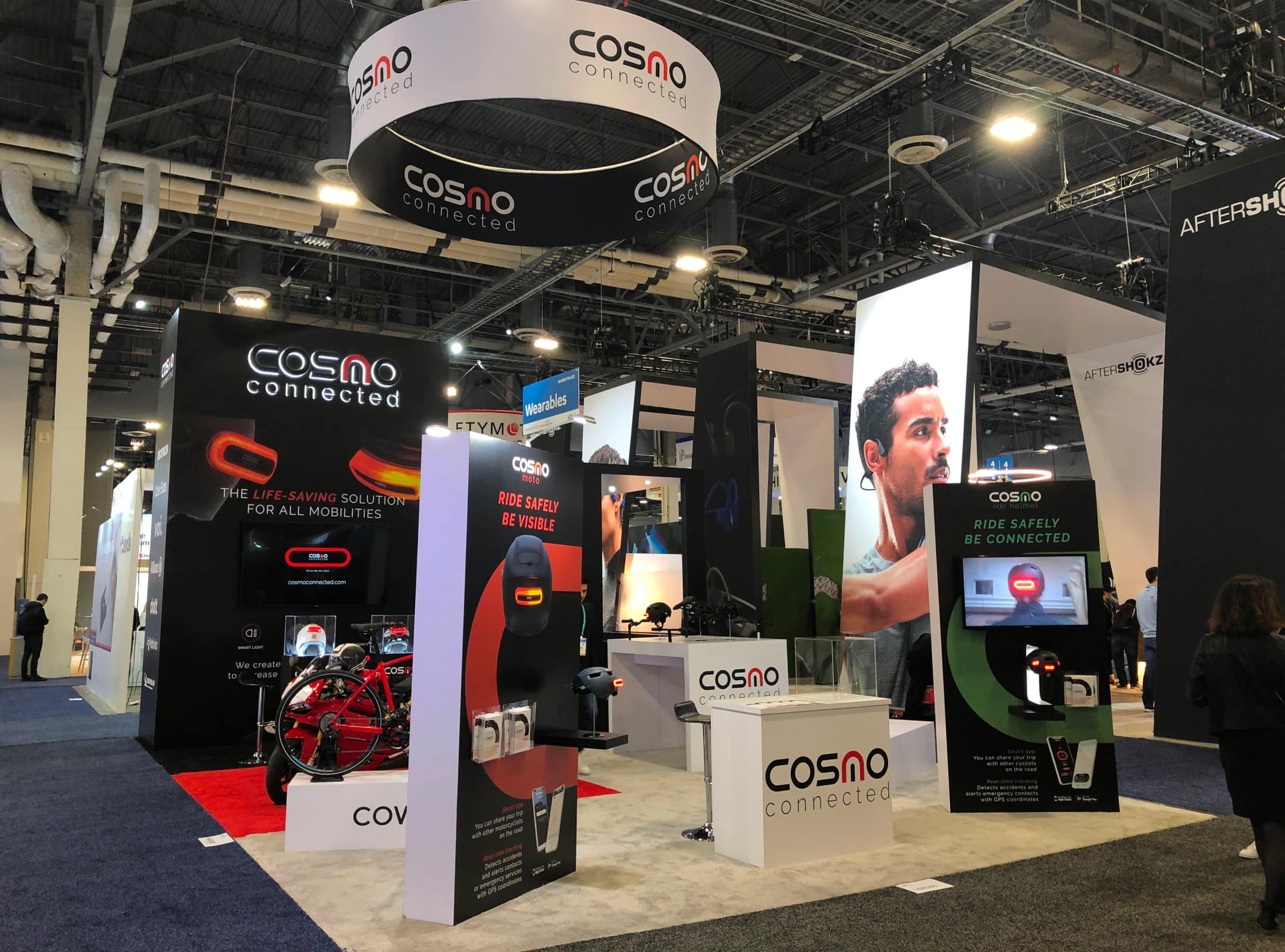
How do you announce your participation in a trade show and attract visitors?
To attract an audience to your stand, a communication strategy beforehand is essential.
You can send personalized invitations by email to your clients and prospects, announce your presence on social media and offer appointment bookings.
Also remember to showcase your stand’s content: demonstrations, new products, activities or meetings with your team.
On the day of the show, plan activities and entertainment to capture visitors’ attention and make them want to stop by.
How do you calculate the ROI of a trade show?
The ROI of a trade show is calculated by comparing the total investment with the benefits generated.
- Total investment: add up all the costs related to preparing for and taking part in the show.
- Benefits generated: measure results in terms of qualified leads, business opportunities and direct or indirect revenue.
- ROI calculation: the goal is for the benefits generated to exceed the total cost of your participation.
ROI = (Benefits generated – Total cost) ÷ Total cost × 100
Beyond the immediate monetary calculation, also take into account medium and long-term benefits.
Brand awareness, positioning as an expert, meetings with future partners and leads that convert later also contribute to the success of the show.
How long does it take to prepare for a trade show?
Preparation for a trade show should ideally start several months before the event. The timeline depends on the size of the stand, the complexity of its design, technical constraints and the communication materials to be produced.
For a custom stand, it is recommended to plan far enough ahead to validate the design, manufacturing, logistics and set-up.
What equipment should you plan for a trade show stand?
The equipment needed depends on your objectives and the format of the stand.
You should generally plan for furniture, suitable lighting, visible signage, power outlets, screens or presentation materials, a storage area and, if necessary, demonstration or meeting areas.
FAQ: Preparing for a Trade Show
When should you start preparing for a trade show?
Preparation should start as soon as you register, ideally several months before the event. This timeframe allows you to secure your location, design the stand, organize logistics, prepare communication materials, train your team and plan sales follow-up.
How do you choose the right trade show?
The choice depends on the expected audience, your industry, the quality of exhibitors, the cost of participation and your business objectives. You should favor a show whose visitors genuinely match your target market.
What elements should you plan to design an effective stand?
An effective stand should be visible, easy to read and welcoming. It should include clear signage, a discussion area, suitable furniture, consistent lighting, presentation materials and a way to collect contacts.
How do you attract visitors to a stand?
Visibility is built before the show with targeted invitations, social media posts and appointment bookings. On site, the stand should present a clear message, offer useful activities, demonstrations or an active welcome from the team.
How do you measure the return on investment of a trade show?
ROI is measured by comparing the costs incurred with the results achieved: qualified leads, appointments, sales, partnerships, visibility and future business opportunities. A structured post-show follow-up is essential to accurately assess return on investment.
Article updated on August 28, 2026.




Ile-de-France・Centre-Val de Loire
01 79 75 89 87

Provence-Alpes-Côte d’Azur・Corse
04 84 49 62 64
Nouvelle-Aquitaine
05 35 54 59 88
Hauts-de-France・Normandie
03 74 09 83 62
Bretagne・Pays de la Loire
02 57 64 07 94
Grand-Est・Bourgogne
03 52 74 06 68
Auvergne-Rhône-Alpes
04 28 29 61 35
Occitanie
05 82 95 39 28
Switzerland
+41 076 504 33 02
subtitle
Product name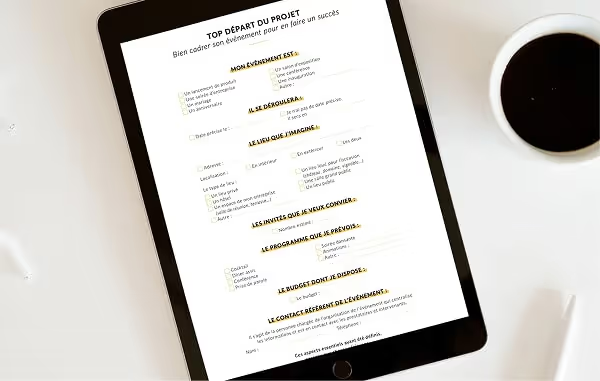
Discover the Atawa Guide
The Atawa Guide is the new essential tool for organizing your events: from launching your project to bringing it to life, no detail has been overlooked to ensure your event's success.