Organizing a corporate event is a strategic investment. Whether it is a seminar, a conference, a party, a product launch or a gala, its cost depends on many factors.
The venue, logistics, technical setup, catering, entertainment, communication and coordination all directly influence the event budget. There is therefore no single price that applies to every project.
To estimate the cost of your event properly, it is best to break it down by expense category, to distinguish fixed costs from variable costs and to anticipate the additional fees that may appear during the organization process.

1. What Expenses Should You Plan For?
Venue Rental: A Strategic Choice
The choice of venue plays a central role in the organization of a corporate event. A reception hall, a hotel, a rooftop, a castle, an industrial space or a temporary structure involve neither the same costs nor the same constraints.
The price depends in particular on the location, the capacity, the rental period, the time of year, the level of standing desired and the equipment already available on site.
You should also check which services are included in the price. Furniture, cloakroom, restrooms, security, cleaning or some technical equipment may be included in the offer or invoiced separately.
A venue that seems cheaper can end up generating more expenses if it requires additional fittings, an electrical installation, heating or specific technical equipment.
As a guide, renting a standard hall starts at around €1,500 per day, while an unconventional venue can exceed €10,000. These amounts vary depending on the standing, the location and the services included.
Logistics and Infrastructure: Comfort First
Logistics ensures the comfort of guests and the smooth running of the event. Depending on the chosen venue, it may be necessary to provide tents or temporary structures, flooring, furniture, a cloakroom, restrooms, signage or a power supply.
For an outdoor event, the event budget must also include heating or air conditioning solutions, technical access, the safety of the installations and a possible fallback solution in case of bad weather.
These items are sometimes less visible than decoration or entertainment, but they directly determine the quality of the experience. Insufficient logistics can harm the flow, comfort and safety of participants.

Technical Services: Sound, Lighting, Video
Technical equipment makes it possible to showcase speeches, entertainment and the highlights of the event. Depending on the format, you may need to provide sound equipment, microphones, ambient lighting, stage lighting, screens, a video projector, a stage, video recording or a live broadcast.
These are often accompanied by technical management and the presence of technicians during setup and throughout the event.
Needs must be sized according to the size of the venue, the number of guests and the level of ambition of the project. An internal meeting does not require the same resources as a convention, a gala or a conference with several speakers.
For a standard technical setup, expect between €2,000 and €8,000. A hybrid event with live broadcast can reach €15,000, depending on the equipment and the human resources required.

Catering and Beverages: Cocktail or Sit-Down Meal?
Catering often represents a significant share of the budget of a corporate event. The cost varies depending on the chosen format: breakfast, coffee break, cocktail reception, canapé reception, buffet, sit-down meal, culinary entertainment or gala dinner.
The number of guests, the quality of the products, the level of service, the beverages, the tableware and the caterer’s logistical needs directly influence the price.
A cocktail reception encourages conversation and movement, while a sit-down meal is better suited to a formal evening or a gala. You should also provide options adapted to allergies, special diets and vegetarian guests.
As a guide, a standard caterer offers packages of around €30 to €80 per person for a cocktail reception and €80 to €250 per person for a gourmet dinner. Check the beverages, service, tableware and equipment included in each proposal.

Communication and Branding
Communication helps give visibility to the event and strengthens the company’s image.
The budget may include invitations, badges, signage, welcome screens, printed materials, video content, stage branding or personalized decorative elements.
The level of personalization directly influences the cost. Custom-made scenography or decor generally requires a larger budget than an installation based on rented or reusable elements.
To optimize expenses, it can be worthwhile to concentrate branding elements on the most visible areas, such as the entrance, the stage or the photo area.
Entertainment and Speakers
Entertainment creates highlights and improves the participants’ experience.
Depending on the purpose of the event, you can hire a DJ, a band, a photo booth, a magician, a host, a speaker or offer a team-building activity.
The corporate entertainment budget depends on the duration of the performance, the reputation of the performer and the technical equipment required.
Travel, accommodation, catering or preparation costs may also be added to the initial price.
A speaker can charge several thousand euros. The price of an interactive workshop or an artistic performance depends on the chosen service and the resources required.
Human Resources and Coordination
Organizing an event often involves several people: project manager, stage manager, technicians, reception staff, waiters, security guards, cloakroom staff or cleaning crew.
Coordination ensures communication between suppliers, adherence to the schedule and the handling of unforeseen events.
The cost depends on the number of people involved, the duration of the event and the level of support desired.
2. What Hidden Costs Should You Anticipate?
Some fees are not always visible in the first estimate. They can nevertheless significantly change the cost of the corporate event.
Delivery fees, extra setup hours, electricity, heating, cleaning, insurance, music rights, security or administrative authorizations can be added to the initial budget.
Weather constraints are also an item to anticipate for events held outdoors. An additional tent, a heating system or a fallback solution may become necessary a few days before the event.
Finally, last-minute adjustments can lead to additional costs, particularly when they require urgent delivery or the mobilization of extra teams.
To avoid unpleasant surprises, it is recommended to plan a safety margin of 10 to 15%. This reserve makes it possible to handle unforeseen events without reducing the quality of essential services.
3. How Do You Build an Event Price Grid?
An event price grid helps you better understand how the budget is distributed and measure the impact of the number of guests.
Fixed Costs
Fixed costs do not depend directly on the number of participants. They can include venue rental, the stage, sound equipment, technical management, scenography, temporary structures, equipment transport, as well as setup and dismantling.
These expenses generally remain stable whether the event welcomes one hundred or one hundred and fifty people.
Variable Costs
Variable costs change according to the number of guests. They mainly concern catering, beverages, furniture, badges, gifts, reception staff, transport or possible overnight stays.
This distinction makes it easier to calculate the cost per participant and to anticipate the impact of an increase or decrease in the number of registrations.
4. How Can You Optimize the Budget of a Corporate Event?
Define Priorities
The first step is to identify the objectives of the event. The budget should be concentrated on the elements that directly influence the guests’ experience, such as comfort, flow, catering, sound, lighting and safety.
Secondary items can then be adjusted according to the available budget, without compromising the overall quality of the project.
Negotiate with Suppliers
It is important to compare several offers and to request detailed quotes.
An event organization quote must specify the services included, the quantities, the schedules, the delivery fees, the setup conditions, the options and any additional costs.
Comparing only the overall amounts can be misleading. Two quotes showing similar prices may cover very different services.
Pool and Optimize Expenses
Some items can be pooled or simplified without harming the quality of the event.
For example, you can concentrate the decoration on the most visible areas, use the same lighting for several sequences, choose versatile furniture or limit technical modifications to the venue.
Reducing printed materials and grouping certain suppliers can also help keep costs under control.
Track Your Budget with the Right Tools
A tracking table makes it possible to compare the forecast budget with the expenses actually incurred.
It should include the expense categories, the quotes received, the deposits paid, the payments still to be made, any variances and the margin set aside for unforeseen events.
Regular tracking makes trade-offs easier and limits the risk of overspending.
5. What Budget Should You Plan Depending on the Type of Event?
What Price Should You Expect for a Corporate Seminar?
The price of a corporate seminar depends on its duration, the number of participants, the venue, the catering, the meeting equipment and any overnight stays.
The budget must include room rental, audiovisual equipment, breaks, meals, accommodation, transport, activities and coordination.
A one-day seminar therefore does not represent the same investment as a residential event lasting several days.
What Budget Should You Plan for a Corporate Party?
The budget of a corporate event or party depends on the venue, the catering, the beverages, the furniture, the scenography, the entertainment and the technical setup.
A party held on the company’s premises generally requires less investment than a gala including a dinner, a show, scenography and audiovisual equipment.
The number of guests and the level of decor personalization also strongly influence the final cost.
What Budget Should You Plan for a Conference?
The budget for organizing a conference generally includes venue rental, the stage, sound equipment, microphones, screens, speakers, reception, recording, catering and communication.
The cost depends mainly on the number of participants, the technical needs and the reputation of the speakers.
A conference that is broadcast live or recorded also requires additional technical and human resources.
Why Request a Quote for Your Event?
A detailed quote makes it possible to understand how the budget is distributed and to make the right trade-offs.
It helps check the services included, compare the different options, identify forgotten costs and anticipate unforeseen events.
It also helps secure the schedule and adapt the project to the available budget.
Atawa supports companies in the design and implementation of their professional events. Depending on the needs of the project, the teams can work on structures, furniture, scenography, technical installations and logistical coordination.
FAQ on the Cost of a Corporate Event
What budget should you plan for a corporate event?
The budget depends on the format, the number of guests, the venue, the catering, the technical setup, the furniture and the entertainment. A reliable estimate must distinguish fixed costs, variable costs and a margin for unforeseen events.
What are the main expense categories?
The main categories are the venue, infrastructure, furniture, technical setup, catering, beverages, decoration, entertainment, staff, security and coordination. Their weight varies depending on the type of event.
What hidden costs should you anticipate?
Hidden costs often concern delivery, electricity, setup hours, cleaning, insurance, music rights, security, weather constraints and last-minute adjustments.
How can you reduce the cost without harming the experience?
Concentrate the budget on the elements that are visible and useful to guests, pool certain equipment, simplify secondary items and book early enough to avoid costs linked to emergencies.
Why request a detailed event quote?
A detailed quote makes it possible to understand the services included, compare options, identify missing costs and manage trade-offs. It secures the relationship between the objectives of the event and the available budget.




Ile-de-France・Centre-Val de Loire
01 79 75 89 87

Provence-Alpes-Côte d’Azur・Corse
04 84 49 62 64
Nouvelle-Aquitaine
05 35 54 59 88
Hauts-de-France・Normandie
03 74 09 83 62
Bretagne・Pays de la Loire
02 57 64 07 94
Grand-Est・Bourgogne
03 52 74 06 68
Auvergne-Rhône-Alpes
04 28 29 61 35
Occitanie
05 82 95 39 28
Switzerland
+41 076 504 33 02
subtitle
Product name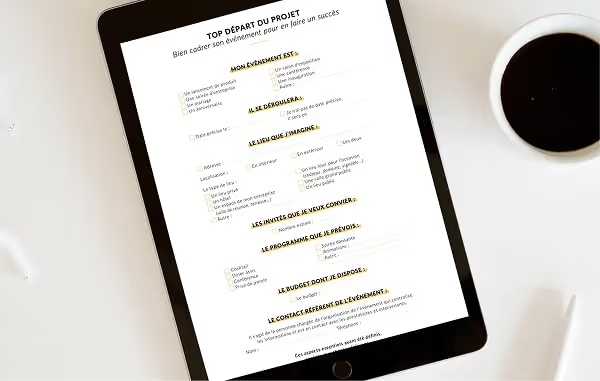
Discover the Atawa Guide
The Atawa Guide is the new essential tool for organizing your events: from launching your project to bringing it to life, no detail has been overlooked to ensure your event's success.