In business, the workshop can take precedence over the traditional meeting. And for good reason: it turns collective thinking into concrete results.
Organizing a workshop means bringing your teams together around a specific issue to produce something concrete: ideas, solutions, a shared action plan.
But a successful collaborative workshop doesn't happen by chance. It rests on two inseparable pillars: method (clear objectives, suitable format, well-paced facilitation) and setting (the chosen venue and its layout). Too often left until last, this second pillar nonetheless shapes group dynamics and the quality of the discussions.
Here is the complete guide to organizing a corporate workshop, from setting objectives to arranging the venue.

What is a workshop? Definition, benefits and types of collaborative workshops
A workshop isn't just another meeting on the calendar. It's a format in its own right, with its own rules, tools and outcomes. Before organizing a workshop, it's worth understanding what sets it apart and what it can really deliver.
Collaborative workshop or traditional meeting: what's the difference?
The term « workshop » combines the English work and shop: a collaborative work session where everyone contributes actively, on an equal footing. In practice, a workshop brings a group together around a specific issue to produce a concrete deliverable: an action plan, a decision, a prototype, a prioritized list of ideas.
Where the traditional meeting is top-down a manager informs or aligns their teams — the workshop is bottom-up: everyone's active participation is at the heart of the process, guided by a facilitator who steers the dynamic without ever weighing in on the substance.
Innovation, cohesion, engagement: the real benefits of the workshop
By mixing profiles and stepping outside the usual framework, teams surface ideas no one would have found alone. The collective dynamic turns the sum of individual expertise into shared thinking, ideal for solving complex problems. Working together breaks the ice and strengthens cohesion between departments, especially when the format breaks from routine. And because everyone feels like a stakeholder in the outcome, engagement in implementation follows naturally.
Match the format to your objective: the 5 types of workshops
Not all workshops look alike. The format should be chosen based on what you're trying to produce. Not out of habit.
- Ideation workshop (brainstorming): to generate ideas for a new product, a campaign or an innovative solution, by stimulating the group's divergent thinking.
- Training workshop: encourages learning by doing. Passing on a method, a tool or a skill, through role-play and interactive exercises.
- Problem-solving workshop : to analyze a blocker, identify its root causes and co-build actionable solutions with stakeholders.
- Strategic workshop : aims to align a vision, steer project management or support change management through a shared roadmap.
- Team-building workshop : to strengthen team cohesion, onboard new arrivals or ease tensions through structured collaborative activities.
Organizing a workshop: the 6 key steps
A successful workshop is built well in advance. Every step counts, from defining objectives to capitalizing on ideas after the session.
Step 1 - Define the objectives and the format
To organize a workshop that delivers concrete results, start with a simple question before booking a space or calling your teams together: what's the goal? Brainstorming, solving a problem, training, building alignment, deciding… each intention calls for a different format.
Then set a SMART objective (Specific, Measurable, Achievable, Realistic, Time-bound) and define the session's main content rather than a vague intention.
Next, define the group size (5 to 12 participants is ideal; beyond that, split into subgroups), the mode (in-person, remote or hybrid) and the duration: 1 to 2 hours for a focused brainstorm, half a day for a specific issue, a full day to structure a project.
Step 2 - Choose the ideal venue for a workshop
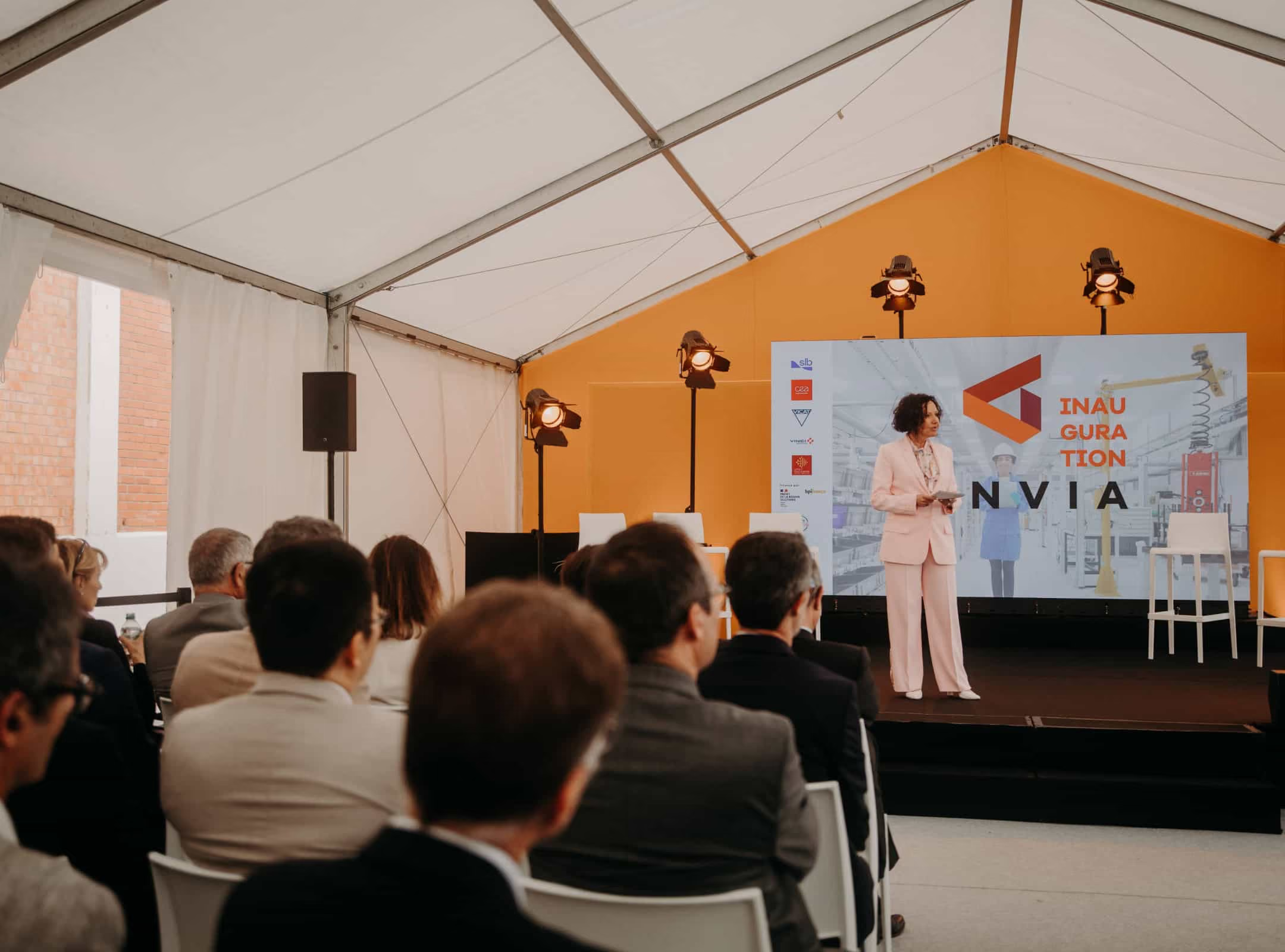
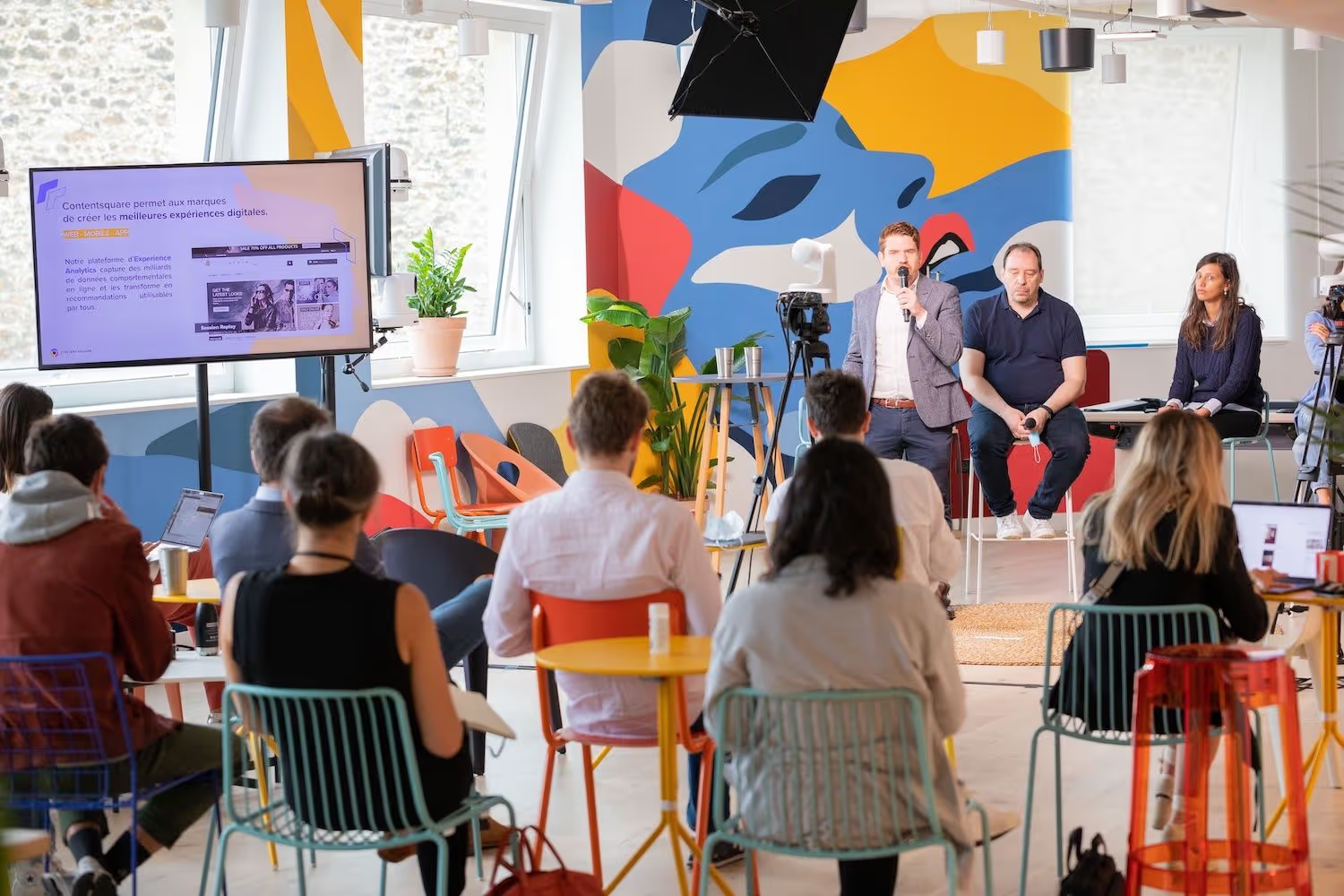
An effective workshop venue combines several criteria: natural light, modular space, wall surfaces available for post-its and flip charts, and acoustics suited to subgroup discussions. Getting out of the company's own premises is often decisive: a different environment sparks creativity, frees up speech and delivers a far more engaging collaborative work experience than a regular meeting room.
If the venue lacks infrastructure, a reception tent, a geodesic dome or a bamboo marquee can turn any plot of land into a tailor-made workshop space, free of location constraints.
Step 3 - Set up the space for a collaborative workshop
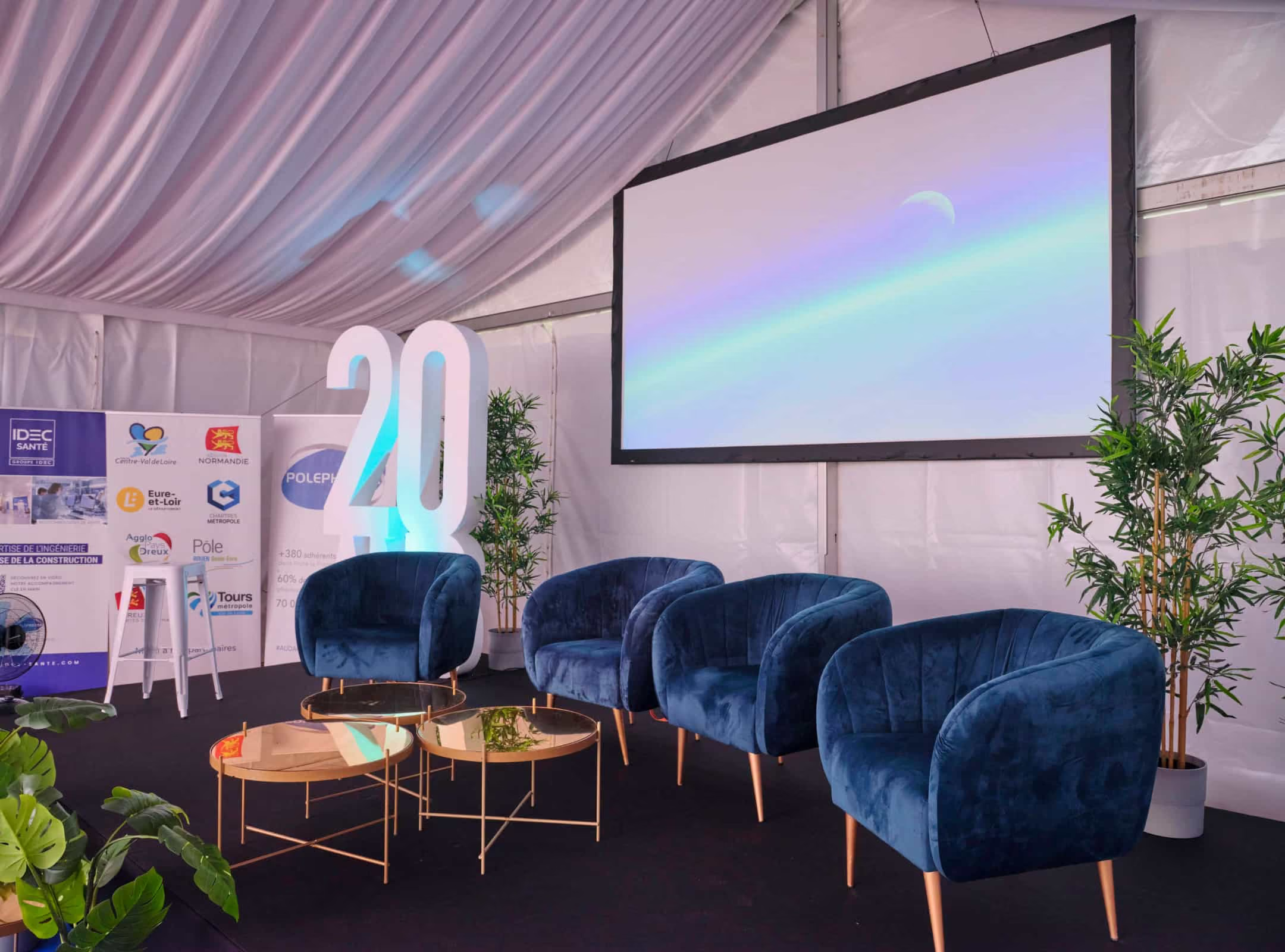
First rule: movable tables, never fixed ones. Being able to reconfigure the room in minutes — from a plenary to breakout islands, then a circle for the debrief — is essential to keep pace with the workshop. Comfortable chairs, high tables, flip charts and whiteboards directly shape the group dynamic.
The space layout should serve the objective: islands for co-creation, a U-shape for directed workshops, world café for rotating subgroup discussions. Adjustable lighting, suitable sound equipment (essential beyond 15 participants) and digital tools like Klaxoon or Miro round out the setup.
Step 4 - Build the program and choose the tools
Write a detailed agenda and schedule that alternates between introduction, individual work, subgroups, report-backs and wrap-up. Stick to the time allotted for each activity: time pressure is a driver of creativity and decision-making… not an enemy. Plan a break every 60 to 90 minutes; beyond that, attention drops and the quality of discussion declines.
The facilitator, or workshop leader, is the linchpin of the whole process: internal (a manager neutral on the topic) or external (a specialized consultant). They steer the dynamic without ever weighing in on the substance.
Step 5 - Facilitating a workshop: the keys to the big day
Start with a playful icebreaker of 5 to 10 minutes to loosen tongues, dissolve hierarchical codes and build a climate of trust. A clear framing at the outset is essential: a reminder of the objective, the agenda and the ground rules, kindness, active listening, no judgment.
Then alternate working formats (individual, pairs, subgroups, plenary) to sustain attention and surface different ideas at each stage. Leave plenty of room for hands-on practice rather than theory.
Step 6 - Close the workshop and capitalize on the ideas
Close with a round-table: each participant sums up what they'll take away in one word and commits to putting it into practice. Send the write-up within 48 hours, without this document, the best ideas disappear. Gather feedback with a short satisfaction questionnaire: a few questions on usefulness, format and facilitation are enough to improve future sessions.
For every idea kept: an owner, a deadline, a success indicator. That's what turns a collaborative workshop into a real operational lever.
Organizing a corporate workshop with Atawa: the turnkey solution
Organizing a workshop away from company premises requires logistics that many underestimate. Atawa takes care of the entire infrastructure so you can focus on what matters most: facilitation and your teams.
A comprehensive offering: from venue to furniture
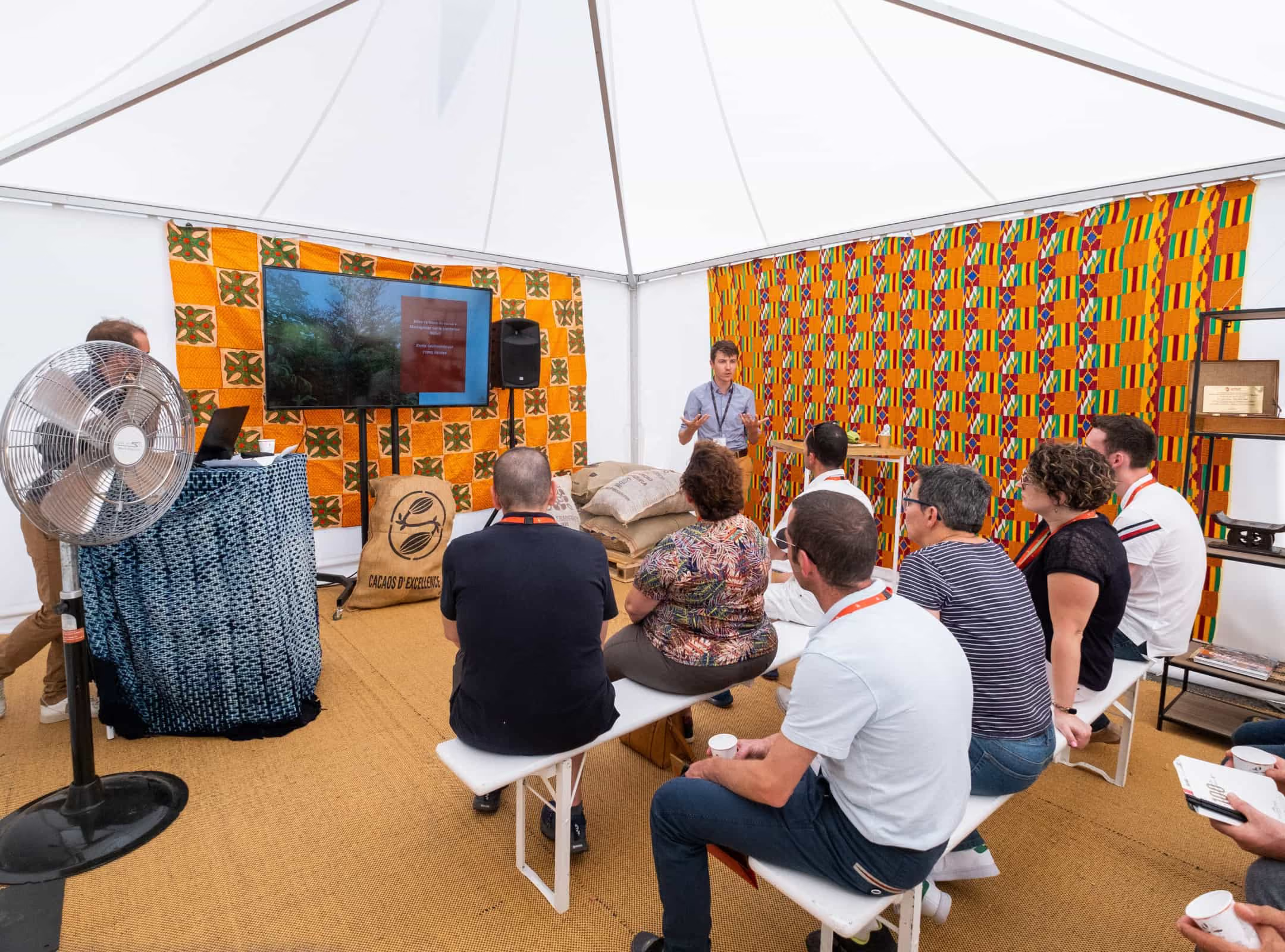
9 trades brought together under a single point of contact: tent, furniture, tableware, flooring, decor, lighting, sound and video, power, sanitation. Our modular furniture (tables, chairs, high tables, flip charts) is selected based on the type of workshop and your brand identity. Reception tents, bamboo marquees and geodesic domes make it possible to create a unique workshop space, even on a plot with no infrastructure.
Tailor-made support throughout France
A dedicated advisor supports you from concept to delivery, factoring in your objectives, the venue's specifics and your budget. Our local teams, present in every region of France, ensure controlled, secure setup. An Atawa coordinator is on site on the day: while you facilitate, we handle the rest.
Want to know more? Discover our dedicated support for organizing corporate seminars.
FAQ – All your questions about organizing a workshop
How long should a workshop last?
The length of a workshop depends on the topic and objectives. A short format of 1 to 3 hours is enough for a brainstorm or a focused discussion. A longer 1-to-2-day workshop allows you to dig deeper into a project and move on to implementation.
What group size works best for an effective workshop?
For a group, 5 to 12 participants is the ideal size: enough for a diversity of viewpoints, small enough for everyone to speak up. Beyond that, split into subgroups with plenary report-backs. Below 5 people, a traditional meeting format is preferable.
What budget should you plan for a professional workshop?
A half-day internal workshop involves almost no direct cost beyond employees' time. A 2-day residential workshop, away from company premises, can reach several thousand euros depending on the venue, furniture, catering and facilitation. The Atawa team helps clients optimize costs with a tailored approach.
To go further: how much does it cost to organize a corporate event? Complete guide
How do you run a successful remote workshop?
A remote workshop needs more brisk facilitation than an in-person one: sessions of 90 minutes maximum, alternating between plenaries and breakout rooms, collaborative visual tools (Miro, Klaxoon, Mural) and clear engagement rules (camera on, structured speaking turns). Plan a technical test beforehand to avoid surprises on the day.
Workshop or seminar: what's the difference?
A seminar is a broader event that can include talks, workshops, meals and team-building activities. A workshop is a precise format centered on producing a concrete deliverable. In fact, a corporate seminar often includes several workshops within its program.
To learn even more about setting up and making the most of your space, check out our article: Why and how to organize a seminar?


Ile-de-France・Centre-Val de Loire
01 79 75 89 87

Provence-Alpes-Côte d’Azur・Corse
04 84 49 62 64
Nouvelle-Aquitaine
05 35 54 59 88
Hauts-de-France・Normandie
03 74 09 83 62
Bretagne・Pays de la Loire
02 57 64 07 94
Grand-Est・Bourgogne
03 52 74 06 68
Auvergne-Rhône-Alpes
04 28 29 61 35
Occitanie
05 82 95 39 28
Switzerland
+41 076 504 33 02
subtitle
Product name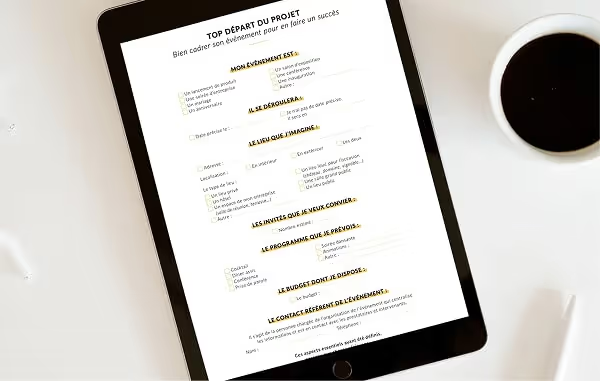
Discover the Atawa Guide
The Atawa Guide is the new essential tool for organizing your events: from launching your project to bringing it to life, no detail has been overlooked to ensure your event's success.