The meeting has become the most versatile format in the modern company. Project kick-off, quarterly all-hands, leadership committee, brainstorming, town hall: the same word covers very different realities, each with its own rules.
A corporate meeting is a professional gathering that brings together employees, executives or partners around a specific objective. Its success rests on three levers: the right type, the right method and the right setting – the latter being all too often the poor relation of the organisation.
Here is the complete guide to organising a corporate meeting that lives up to your ambitions.

Why organise a corporate meeting?
The purposes
A corporate meeting can be recurring or one-off, operational or strategic, and bring together 5 people or 500. Whatever its form, it serves one of these four purposes:
- align teams around a vision, a decision or a direction;
- decide collectively based on shared information;
- inform and share news, results or changes;
- unite and engage people around a project or a shared culture.
Meeting, seminar, convention, workshop: what's the difference?
The meeting is often confused with other event formats. Here are the distinctions to keep in mind:
Types of corporate meeting
One word, many different realities: each situation calls for a specific format. Here are the 8 most common types of meeting, along with their typical duration and suitable setting.
The kick-off: launching a project
This meeting marks the official start of a project. It brings together the project team and sponsors, for 1 to 3 hours, to align everyone on the vision, scope, roles and timeline. Ideal setting: a room equipped for presentations and interaction.
The all-hands: bringing the whole company together
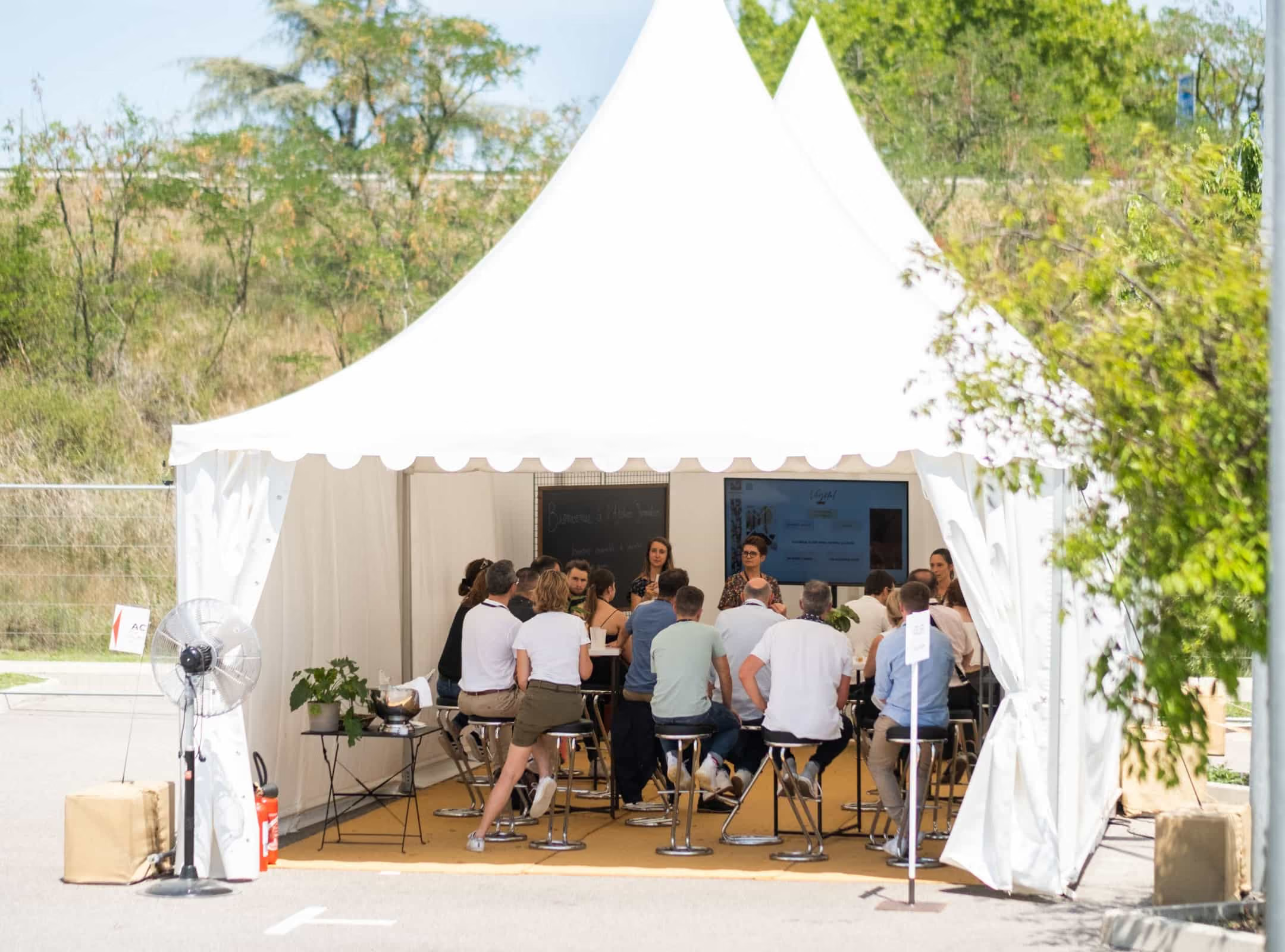
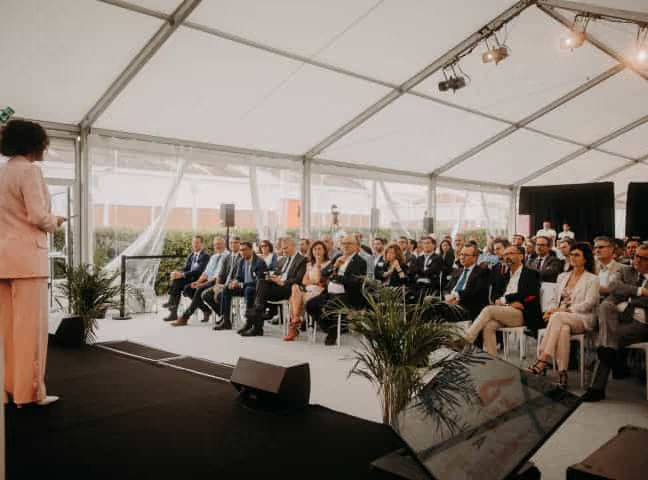
A plenary format that brings together all of the company's employees. Held every quarter or half-year, over 1 to 2 hours, it shares vision, results and news on a large scale. It requires a space capable of hosting the entire workforce, for example under a reception marquee, or a hybrid solution.
The town hall: opening the dialogue
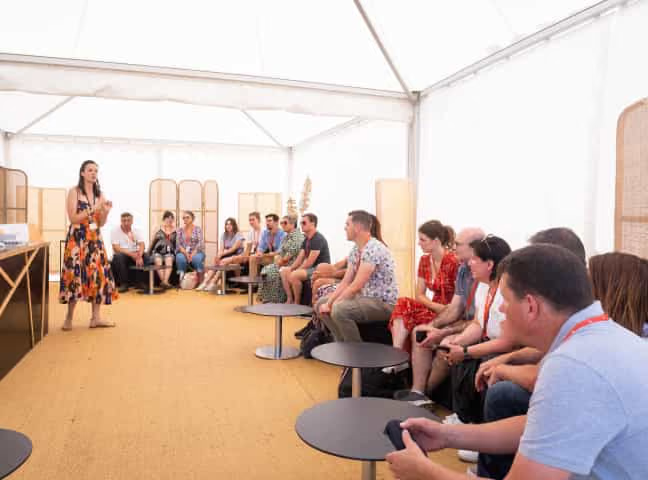
This is the meeting that opens up dialogue: leaders face employees in a Q&A format. Lasting 1 to 2 hours, ideally at the end of the quarter, it aims for transparency, listening and cultural alignment. The space configuration should encourage exchange.
The steering committee: tracking and arbitrating
A project follow-up body with a small number of participants, the steering committee meets every month or every two months for 1 to 2 hours. It is used to take stock, decide and arbitrate. A dedicated room with a screen and meeting-table configuration is recommended.
The executive committee: steering at the highest level
This is the company's strategic body. Weekly or fortnightly, the executive committee lasts 2 to 4 hours and brings together members of management to steer, decide and arbitrate at the highest level. It requires a private room, confidentiality and premium equipment.
The team meeting: setting the pace of everyday work
A recurring check-in for a department or team, it takes the form of a stand-up or a weekly meeting. In 30 minutes to 1 hour, the objective is simple: synchronise team members, unblock pending topics and prioritise. A team room with collaborative furniture is enough.
The brainstorm: bringing ideas to life
The brainstorm brings together a small group for 1 to 3 hours to generate ideas and solve a problem collectively. It calls for a stimulating space, modular furniture and a flip chart accessible to everyone. When the workshop becomes more elaborate and turns into a full production format, it is more commonly called a workshop.
The crisis or decision-making meeting
Non-recurring, it takes place in the event of an emergency or a major decision. Its duration varies from 1 to 4 hours. The objective: analyse the situation, make a decision and communicate quickly. The setting must guarantee confidentiality and have recording or broadcasting equipment if needed.
Organising a corporate meeting: the 6 key steps
The better a meeting is prepared, the greater its chances of success. Here are the 6 steps to structure, run and follow up on it effectively.
1. Define the objective and the format
What outcome do you expect from the meeting? This question determines the right type of meeting, the appropriate duration and the choice between in-person, remote or hybrid. A clear objective is already half the work.
2. Select the participants and their role
For decision-making meetings, the 7 plus or minus 2 rule for participants remains the benchmark. Each person invited must hold a clear role: facilitator, decision-maker, contributor or observer. Limit the "passengers". And send the invitation with the context and the preparation expected, so that everyone arrives ready.
3. Choose the venue and prepare the infrastructure
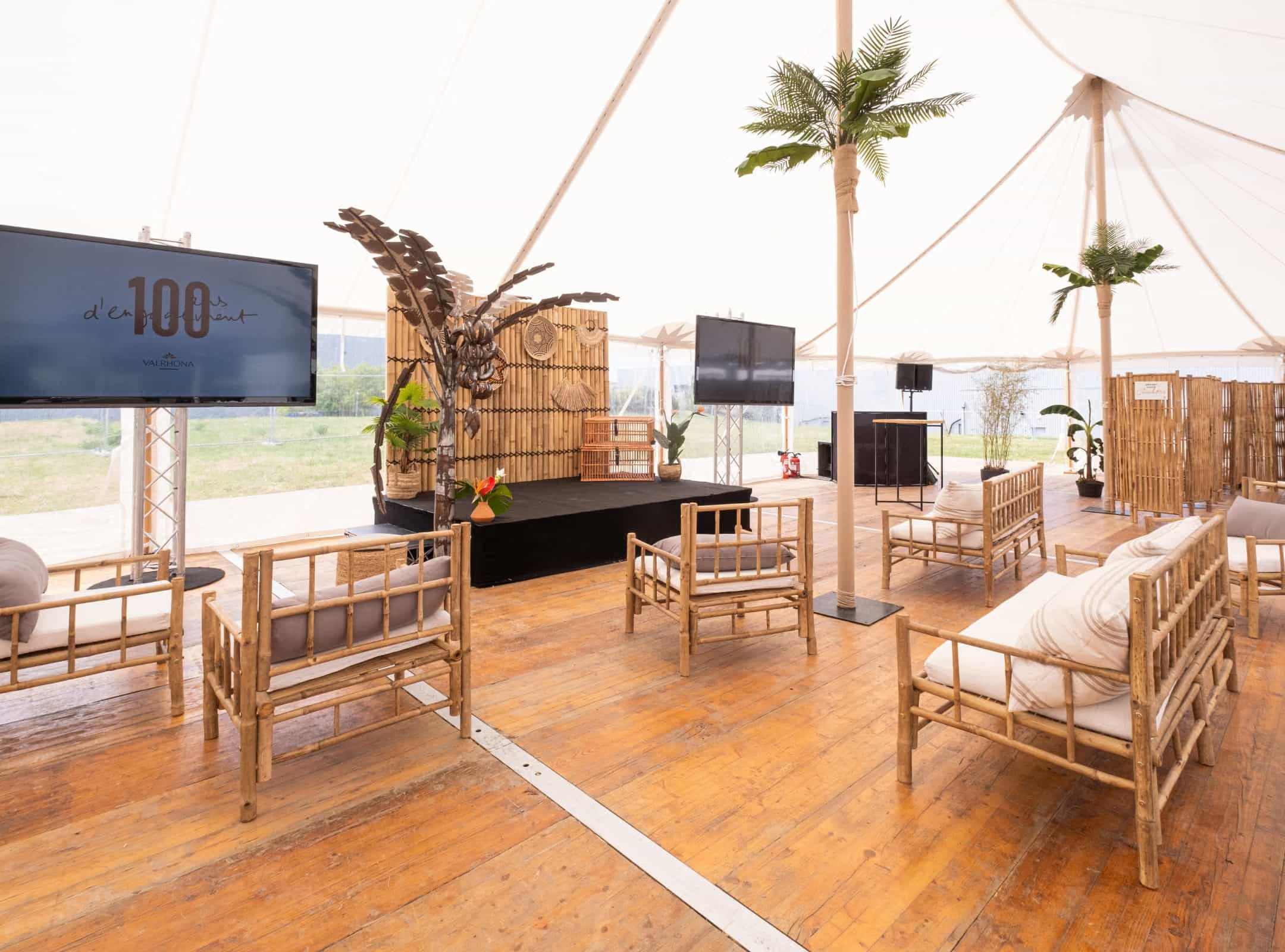
Four criteria guide the choice between an internal room and an event venue: capacity, configuration, equipment, accessibility. Check the connectivity, audio, lighting and air conditioning. Plan the furniture according to the format: U-shape, theatre-style, islands or standing. A large-scale meeting (all-hands, strategic kick-off, leadership seminar) deserves a space designed for the occasion, rather than a standard room.
4. Build the agenda and the timing
Sequence it: opening, content, decisions, conclusion. Allocate a precise amount of time to each point, and stick to it. Plan breaks if the duration exceeds 1.5 hours. And share the agenda at least 48 hours in advance, so that reflection can start beforehand.
5. Run the meeting and engage participants
Running a meeting well is an art. The facilitator sets the tone, keeps the pace and distributes speaking time. Round-table introductions, live polls, icebreakers: engagement techniques vary depending on the format. In hybrid mode, clarify the rules from the outset and equip yourself with suitable tools. Always conclude with the decisions made and the action plan.
6. Report back and follow up
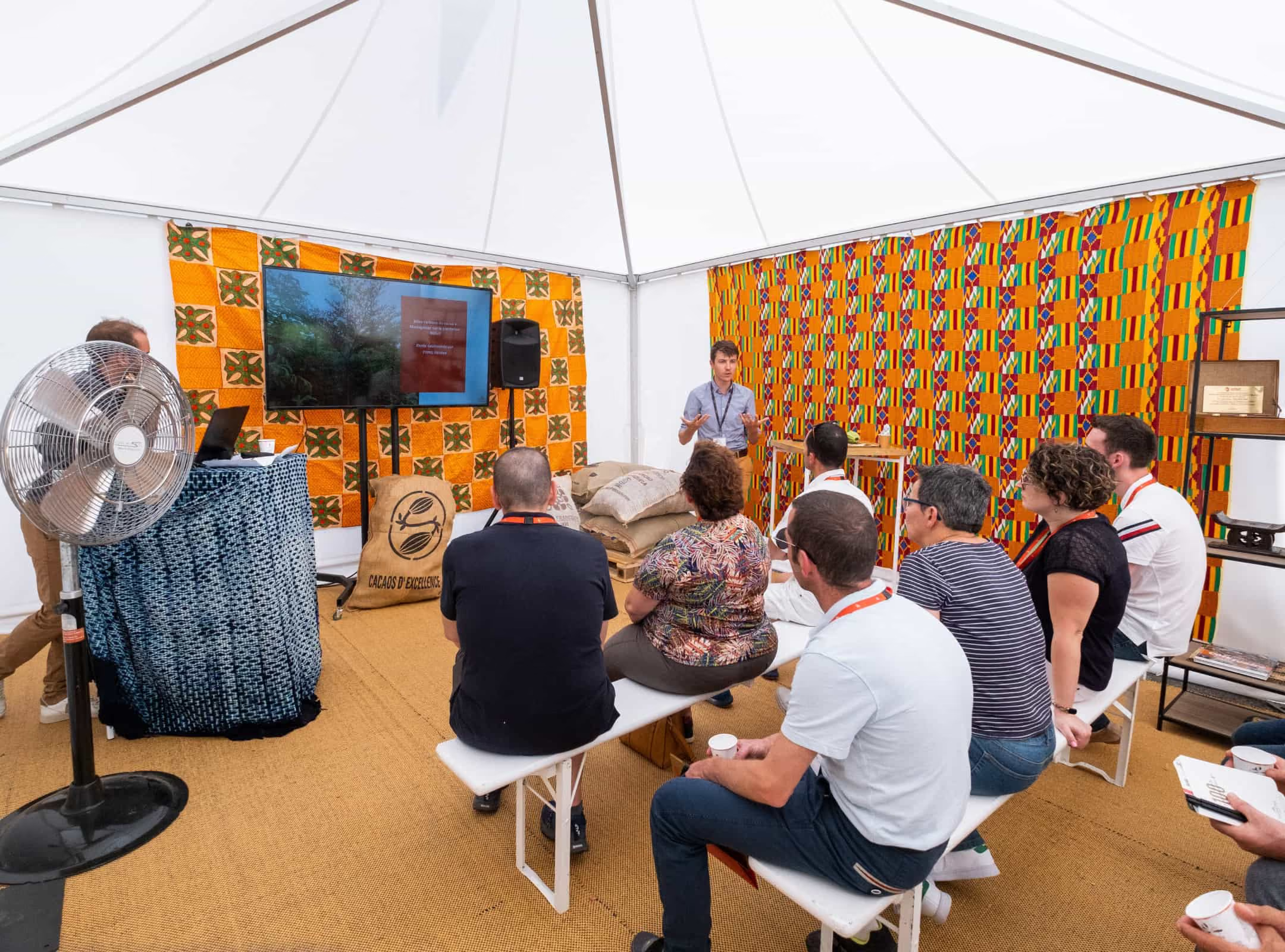
Minutes within 48 hours, an action plan with an owner and a deadline for each point. Measure the effectiveness of the meeting (perceived usefulness, format, duration) to improve with each edition. A meeting without follow-up is only half a meeting.
The setting makes the meeting: choosing the right space and infrastructure
The setting matters just as much as the facilitation. Venue, furniture, sound, lighting: these elements directly shape engagement, focus and the quality of exchanges.
Which space for which type of meeting?
- All-hands for 200 people: reception marquee, auditorium or a privatised event space.
- Strategic project kick-off: an off-site venue, conducive to creativity and stepping back.
- Steering committee / executive committee: private room, premium equipment, guaranteed confidentiality.
- Brainstorm: modular space, collaborative furniture, natural light.
- Hybrid town hall: video recording, sound system, playback screen for remote participants.
Equipment: what to check before the big day
- Furniture suited to the configuration: meeting tables, chairs, cocktail tables depending on the format.
- Sound system: microphones, speakers, monitors suited to the audience size.
- Video: screen, projector or LED wall, recording for remote participants.
- Lighting: atmosphere, highlighting the stage or the speakers.
- Power and air conditioning: participant comfort, technical reliability throughout the event.
Organising your corporate meeting with Atawa
Whatever type of meeting you want to organise, Atawa centralises all logistical and technical needs around a single point of contact.
Atawa brings together 9 trades: marquees, furniture, flooring, tableware, decor, sanitation, lighting, sound/video and power. From a steering committee of 12 people to an all-hands of over 1,000 employees, in-person, hybrid, indoors or outdoors. A dedicated advisor supports you at every stage, from the tailored proposal through to the presence of a coordinator on the day.
FAQ – Your questions about corporate meetings
What's the difference between a "meeting" and a corporate event?
A meeting generally refers to a structured, working session – a kick-off, an all-hands, a town hall – built around a clear objective and often a fixed agenda. A broader corporate event (seminar, convention, conference) tends to combine several purposes at once: information, team bonding, celebration. In practice, a meeting can be one component within a larger corporate event.
How long does a corporate meeting last?
From 30 minutes for a daily stand-up to a full day for a strategic kick-off. Standard formats: 1 to 2 hours for an all-hands or a decision-making meeting, 2 to 4 hours for an executive committee.
How do you run a meeting effectively?
A facilitator sets the tone, keeps to the timing and distributes speaking time fairly. Engagement techniques (round-table introductions, polls, icebreakers) vary depending on the format, but the rule stays the same: open clearly, keep a good pace, and close with decisions and an action plan.
What equipment should you plan for a hybrid meeting?
Video recording, a quality microphone, a playback screen for in-room participants, a reliable streaming platform. The key to a successful hybrid meeting is making sure that remote participants get the same experience as those attending in person.



Atawa in Switzeland
+41 076 504 33 02

Atawa in France
+33 1 79 75 89 87
subtitle
Product name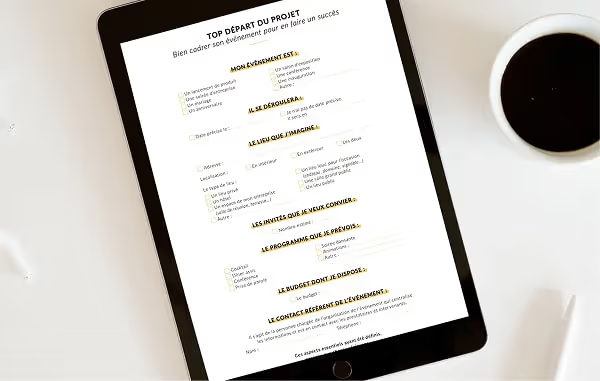
Discover the Atawa Guide
The Atawa Guide is the new essential tool for organizing your events: from launching your project to bringing it to life, no detail has been overlooked to ensure your event's success.